Harvard President’s Faculty Activism Critique Reignites Campus Free Speech Debate
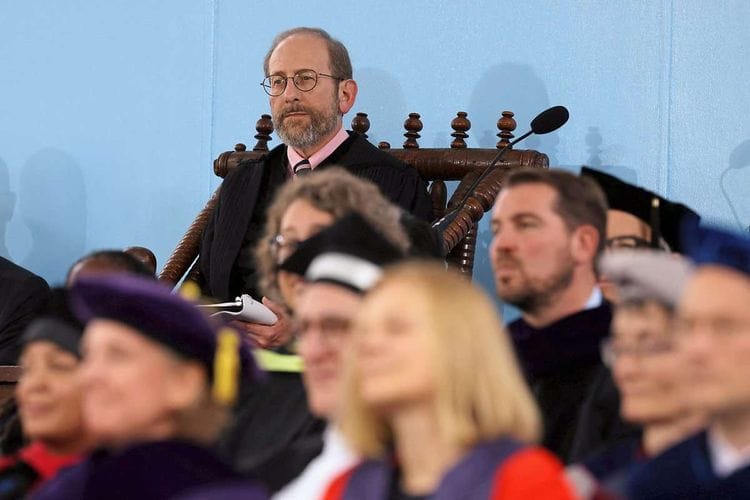
Harvard University President Alan M. Garber has thrust campus culture and classroom norms back into the spotlight after arguing that higher education “went wrong” when it normalized faculty activism in the classroom, a shift he suggested has chilled debate and made some students less willing to challenge prevailing views. The remarks, reported by The Harvard Crimson, add fuel to a broader national argument over what “free speech” means on campus and who gets to define it.
Garber’s comments are particularly consequential because Harvard is a private institution with wide latitude to set its own speech and conduct rules. Yet the pressures he is describing - polarization, protests, donor scrutiny, and skepticism about universities as open forums - are also shaping policy at public universities, where administrators face a very different constraint: the First Amendment.
What emerges is a two-track reality in American higher education: private universities can recalibrate speech norms through policy choice and internal governance, while public institutions often face courtroom-tested constitutional limits and increasingly, state-level legislative mandates.
Private Universities: Free Expression as a Policy Choice
Because Harvard is private, it is not directly bound by the First Amendment in the way a state flagship is. Speech protections at private colleges are typically rooted in institutional policy, faculty handbooks, student conduct codes, and what universities promise in practice.
That distinction is central to how outside watchdogs evaluate the “speech climate” at private institutions. The Foundation for Individual Rights and Expression (FIRE) notes that private universities may not be legally required to mirror First Amendment standards, but they are accountable to the free expression commitments they voluntarily adopt.
Garber’s framing - focused on classroom dynamics and faculty behavior - also points to the internal nature of many private-campus speech disputes. A private university can pursue a “reset” through revised norms and institutional messaging, with changes filtering through departments, faculty governance, and student life rather than through a constitutional test.
Some private universities bolster credibility by adopting formal free expression principles, such as the University of Chicago’s Principles of Free Expression, which emphasize robust debate and warn against restricting speech because it is offensive or unpopular. Harvard has not formally adopted the Chicago Principles, but Garber’s argument about restoring debate and minimizing political signaling in teaching echoes the same cultural premise: universities should cultivate disagreement without fear.
Public Universities: Constitutional Constraints and Rising State Involvement
Public universities operate under a different rulebook. Courts have long held that the First Amendment applies with full force on public campuses. The Supreme Court’s Healy v. James (1972) reaffirmed that students do not lose their constitutional speech rights simply because they are enrolled at a public college.
That means public universities generally cannot restrict speech based on viewpoint and must be cautious about policies that could be construed as censorship, even when speech is provocative or polarizing. The ACLU’s Guidance on Speech on Campus underscores that restrictions by public colleges can amount to government censorship.
Layered on top of constitutional doctrine is a growing patchwork of state policy. As of 2024, More Than 20 States had enacted campus free speech protection laws requiring public institutions to affirm expressive rights and limit administrative discretion over protests and speakers.
Recent litigation illustrates the pressure points. In Texas, a federal court temporarily blocked parts of a University of Texas System effort to enforce new protest restrictions. The case highlights the legal risks public universities face when attempting to regulate campus expression.
Faculty Speech and the Classroom Line
At the center of the debate is faculty speech. While academic freedom traditionally protects professors’ ability to explore controversial topics, critics argue that persistent political advocacy can erode student trust in the classroom as a neutral learning environment.
Organizations such as PEN America have urged universities to distinguish between protected expression and conduct that discourages open inquiry, emphasizing that free speech culture depends not only on policy but also on institutional norms.
Garber’s comments reflect a growing willingness among university leaders to address that distinction directly, even at the risk of internal resistance.
What Harvard’s Free Speech Debate Signals for Higher Education
Harvard’s remarks are notable not because campus speech debates are new, but because they are increasingly shaping institutional governance, donor relations, and public confidence in higher education. Differences between public and private institutions - constitutional mandate versus policy choice - mean there is no single national model for managing free expression.
As political polarization intensifies, pressure is mounting across the sector to clarify where academic freedom ends, where activism begins, and how universities can preserve open debate without undermining trust in the classroom.
For higher education leaders, the question raised by Garber’s critique is not whether free speech matters, but how institutions operationalize it, and what happens if they do not.